Are Venetian blinds good for privacy? Discover how adjustable slats provide flexible privacy and light control for your UK home or business windows.
What privacy means in different rooms
Privacy means feeling safe and not watched. In a bedroom, it usually means nobody can see in while you sleep or get dressed. In a bathroom, it means full cover, even when the light is on. In a living room, you may want to stop neighbours looking in, but still enjoy daylight and a view out. In a kitchen, you may want to block sight lines from the street while keeping the room bright.
In a home office, privacy can also mean fewer distractions, so you can focus. Think about who can see your windows, and when you use the room most. Ground floor rooms need more cover. Upper floors may need privacy from nearby windows, balconies, or taller houses.
How venetian blinds help block views
Venetian blinds use horizontal slats that you can tilt, raise, and lower. This makes them flexible for privacy. When the slats are fully closed, they overlap and block most direct views into the room. If you tilt the slats upwards, you can let light in while stopping people on the street from looking straight inside.
This is useful for ground floor windows, because the light still comes through, but the view from outside hits the back of the slats. If you tilt the slats downwards, you can reduce glare and still keep privacy from higher viewpoints, such as a neighbour’s upstairs window. You can also set the blind at a mid height.
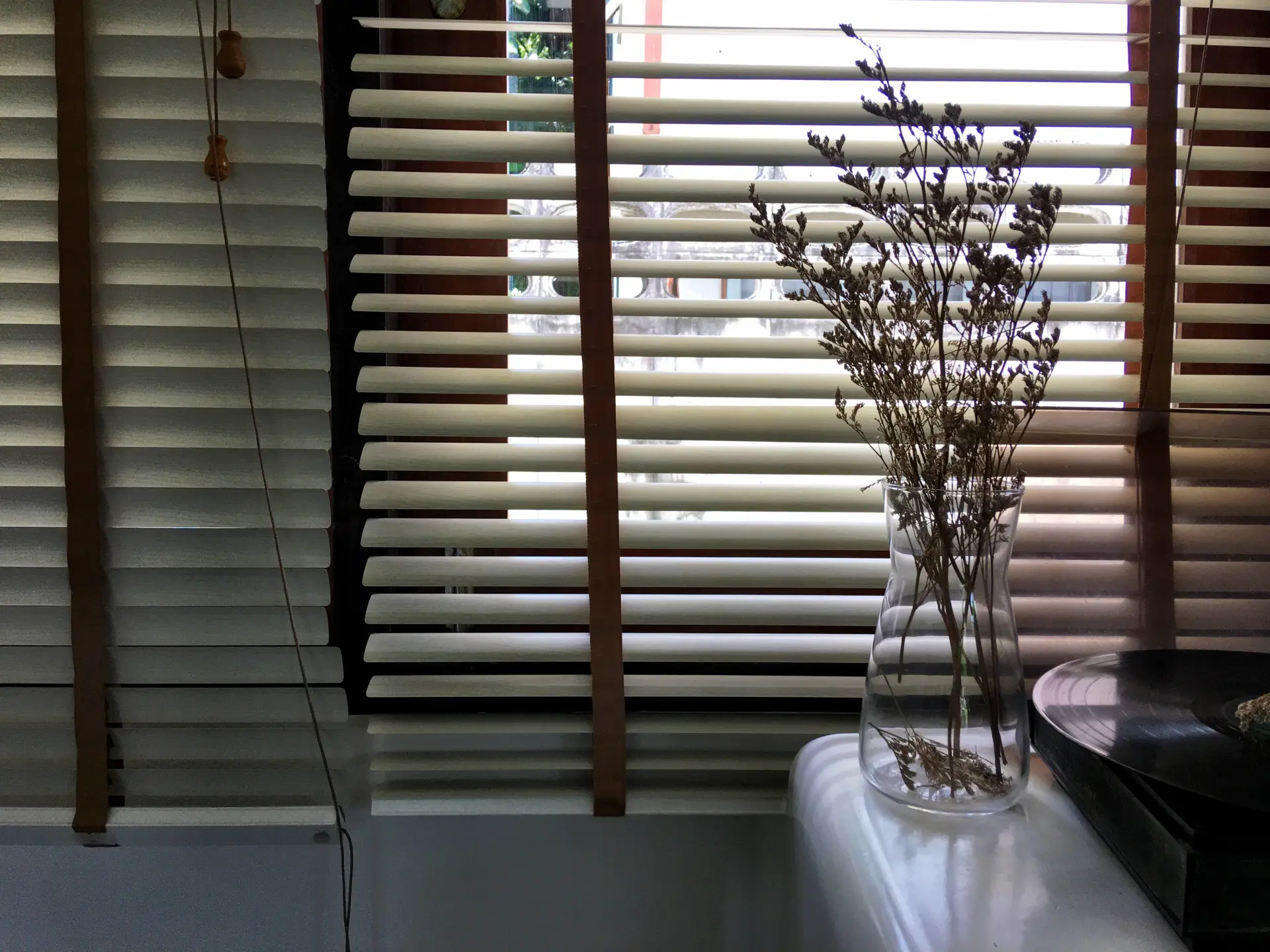
A conventional Venetian blind lowers from the top, so stopping it part-way covers the upper glass and leaves the lower glass exposed. For privacy at pavement height, lower it over the whole window and adjust the tilt. Test both directions against the actual overlooking angle.
For even better cover, choose a blind with a neat headrail and a snug bottom rail, so the slats hang straight and close evenly. If your window is wide, a good fitting matters.
A blind that is too narrow can leave gaps at the sides. Some styles use ladder tape to cover the cord holes, reducing small see through spots. This helps in busy streets too.
Privacy in the day vs privacy at night
In daylight, privacy is often easier. Outside is usually brighter, so people see reflections on the glass. You can tilt venetian blind slats to let light in while blocking the straight line of sight from the street. Tilting the slats upwards can still give a soft view of the sky, but it hides what is happening inside.
At night, the balance changes. When indoor lights are on, your room becomes brighter than outside. Shadows and movement can then be easier to notice through any gaps. Closing the slats fully helps, but tiny spaces can still glow. For stronger night privacy, lower the blind fully and add a lamp away from the window, or use curtains as well. Check the result from outside rather than assuming complete coverage.
Choosing the right slat size for better privacy
Slat size affects how much you can see through a venetian blind and how neat it looks. Smaller slats often close with finer gaps, so they can feel more private. They also suit small windows, because the blind follows the shape of the frame more closely. Larger slats can look calmer and give a wider view when open, but the spaces between slats can be easier to notice if the blind is not fitted well. When choosing slat size, think about how close other people are to your window. If you face a pavement or a neighbour’s drive, smaller slats can help you angle the light while hiding faces. If your window is high up and you mainly want to control glare, larger slats may be fine.

Also consider the angle you use most. If you often keep the slats slightly open, smaller slats can reduce clear lines of sight. If you like to open the blinds wide in the day, larger slats can give a better view out.
Measure the depth of your window recess too. Some larger slats need more space to tilt without touching the glass.
Finally, check the finish and straightness. Slats that are warped or uneven will not close well, whatever size you choose. For bathrooms, many people pick smaller slats and keep them closed, then use the tilt to bring in light. For patio doors, larger slats can look tidy and are quicker to wipe clean. Ask for a sample if you can.
Materials that can improve privacy
Material can change privacy because it affects how well the slats sit and how much light they let through. Aluminium slats are firm and usually close tightly, so they block views well. They are also easy to wipe clean. Wooden slats are thicker, which can reduce tiny gaps and feel more solid.
Faux wood has a similar look, but it copes better with moisture, so it suits kitchens and bathrooms. Fabric wrapped slats can soften the light, but they may be harder to clean. Very thin plastic slats can bend over time, creating uneven lines where light leaks through. Whatever you choose, a good fit and careful installation matter as much as the material. An opaque material and good closure matter more than colour alone.
Test privacy from the actual viewing angle
A slat angle that blocks the pavement may still leave a view from an upstairs window. Lower the blind over the whole glazed area, then check both tilt directions from the places where overlooking occurs. Ask someone to stand inside while you check from a permitted outside position.
Repeat the check after dark with the room lights on. Light escaping between slats does not automatically mean a clear view into the room, but visible silhouettes or gaps around the sides may matter in a bedroom or bathroom. There is no single slat angle that guarantees privacy from every height.
Privacy and blackout are different
Opaque slats can obstruct a direct view while still allowing light around the edges, between slats or through cord holes. Venetian blinds should therefore not be treated as a guaranteed blackout system. Wider slats, narrower slats and decorative tapes each change the appearance, but size or colour alone cannot establish a privacy rating.
For rooms used for dressing, check the closure with a sample or fitted demonstration. Where stronger night-time coverage is needed, consider an additional opaque curtain with sufficient overlap. Check that its track and fabric will clear the blind when both are operated.
Choose controls as carefully as the slats
RoSPA's 2023 survey found blinds in 80% of UK homes; this measures ownership, not privacy. Its current advice also addresses safe controls.
RoSPA advises avoiding looped cords or chains in children's bedrooms. Discuss suitable controls when choosing a new blind.
Keep the slats closing evenly
A bent slat, displaced ladder or obstructed bottom rail can leave a sightline through an otherwise suitable blind. Dust gently, keep objects off the sill where they could catch the blind, and avoid dragging slats past an open window handle.
If the tilt stops short or one side hangs lower, arrange an assessment instead of pulling harder. The fit, straightness and closure of the blind matter more than a claim that one material is always the most private. We can discuss the window position and the level of coverage you need before you choose.
We supply wonderful venetian blinds for your home or business in Newport, Cardiff, Bristol and Hereford. We offer a wide selection of made to measure venetian blind options for Newport, Cardiff, Bristol, and the surrounding areas. Venetian blinds have one main advantage when compared to other made to measure blinds.
This advantage is that they are an excellent choice for those who wish to precisely control the amount of sunlight entering your windows by adjusting the slats without spoiling the overall view.